Benefits of Yoga: What It Actually Changes for a Beginner
You can leave a first yoga class having found a more comfortable way to sit, a steadier place to look during a balance or a quieter way to end the day. Which of those matters to you is a better starting point than chasing a particular pose.
Physical benefits you can feel in a pose
Suppose you spend a first class learning a standing pose with one hand on a block. You might barely remember the pose’s name but leave knowing that you could turn more comfortably with a little support under your hand. That is a useful first result. To see whether anything lasts, revisit a familiar movement on another day, when you have had time to warm up and can pay attention to how it feels.
Longer studies ask different questions. One eight-week trial compared Hatha yoga with a stretching and strengthening program in 118 previously sedentary adults whose average age was 62. Both groups improved on several measures of physical function. That gives us a reason to take regular practice seriously, while leaving open how quickly a younger beginner will notice a change. Read the functional fitness trial
Flexibility you can actually use
In a gentle fold, a teacher might invite you to bend your knees until you can reach a support and breathe comfortably. Repeating that setup gives you a reference for a range of motion that matters in daily life, such as reaching down to lace a shoe while seated.
Be realistic — touching the floor depends partly on your proportions, so distance from fingertips to floor makes a poor measure of everyone’s progress.
Balance while your weight shifts
Moving from two feet toward one gives you time to notice the moment your weight shifts and whether you rush the transition. A hand on the wall can make the movement easier to study, particularly if worrying about a wobble has been using up most of your attention.
Be realistic — balance can feel different when you change footwear, turn your head or look away from a fixed point.
More choices for sitting and standing
Sitting on a folded blanket raises your hips and changes how a cross-legged position feels. Trying it both ways can teach you something about moving your chair, changing position or using support when sitting through a long conversation.
Be realistic — comfort in one class position tells you about that task and gives you little reason to hold one posture all afternoon. Compare Pilates and yoga for posture
Strength during a quiet hold
Holding a standing lunge can keep your legs working while your feet stay still, and a plank shifts some of that supporting work to the upper body. Researchers who measured muscle activity in 11 yoga poses found that different positions engaged different combinations of trunk and hip muscles. Original study of yoga poses
Be realistic — a session spent mainly resting or stretching offers a different strength challenge from one with repeated standing poses and transitions.
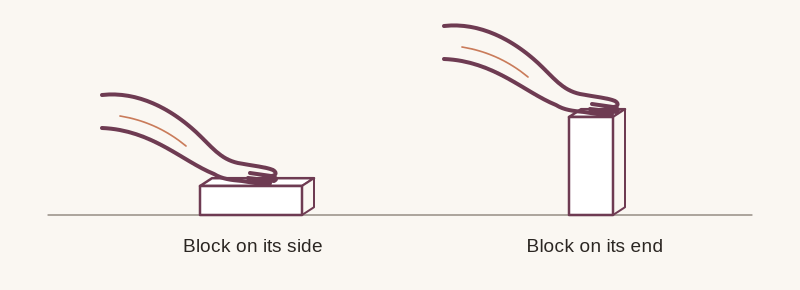
Turning a block changes the height of the support under your hand.
Mental benefits during class and afterwards
Think of the last ten minutes of a busy workday. It can be hard to switch attention from a conversation that went badly to the person sitting across from you at dinner. Yoga offers a time and place to rehearse that shift. You listen for the teacher’s voice, notice your feet and give yourself a moment before trying the next position. Feeling distracted is part of the experience of bringing your attention back.
The US National Center for Complementary and Integrative Health describes evidence of possible benefits for stress and sleep, with results that vary among programs and people. Consider what you want the evening to feel like before choosing a class. A fast sequence with loud music may be enjoyable and energizing, even on a day when you wanted something quieter. NCCIH review of yoga and wellness
A pause when the day feels crowded
A familiar sequence gives you something immediate to do after a difficult phone call or a commute full of delays. The teacher supplies the next instruction, which can be a relief on a day when you have been making decisions for everyone else.
Be realistic — the stressful event may still need your attention when class ends, even if you feel calmer about returning to it.
Practice returning your attention
You may notice halfway through a pose that you are mentally rewriting an email, then hear a cue that brings you back to the room. In a small study of 30 college-age women, performance on attention-related tasks improved immediately after a yoga session compared with the other test conditions. Original study of attention and working memory
Be realistic — a brief change on a laboratory task cannot predict your focus through an entire working day.
Learning what helps you wind down
A slow evening class can mark the end of work and the beginning of a quieter part of the day. Notice whether the closing rest helps you settle, or whether a late journey home and a hurried dinner leave you feeling wide awake.
Be realistic — one good night after class is encouraging, but it tells you little about the cause of a persistent sleep problem.
Confidence asking for support
When a teacher shows several ways into the same pose, you have a chance to try one and speak up if the setup feels awkward. A request such as “Could you put the block closer so I can keep looking forward?” gives both of you something specific to work with.
Be realistic — confidence can be quite local at first, growing with one teacher or group before it carries over to a new room.
A pause at the end of a lesson can be part of what makes you want to come back.
Habits that give the practice a place in your week
Before paying for a series, picture a day when work runs late or your usual childcare plan changes. Decide what part of an ordinary class you would still want to make time for. It might be the unrushed beginning, the standing sequence you are starting to recognize, or the chance to turn your phone off until the lesson ends. That answer is more personal and more useful than a promise to practice every day.
One way to decide is to compare your calendar with the studio’s regular timetable after the introductory week ends. If the only class you liked is usually held when you are at work, ask whether the same teacher offers a recording or another beginner session. Finding the second visit first can save you buying a pass with nowhere to use it.
If all you know so far is that you like clear demonstrations, the first yoga class guide can help you read a timetable. You can also compare how Pilates and yoga approach flexibility before committing to another visit.
Less equipment to organize
Many beginner yoga movements need only clear floor space and a surface that stays put, so a short home session can be easy to arrange. Before shopping, find out whether a studio provides a mat and whether you used a block often enough to want one at home. How to choose yoga blocks
Be realistic — a small room can suit a quiet practice, but you still need space for your arms and feet to move comfortably.
A pace that fits your attention
A beginner foundations class can give you time to watch and try a shape twice, while a flowing class lets you learn by following a pattern. If your first class felt rushed, trying a slower teacher is a practical way to separate your feelings about yoga from your feelings about that single lesson.
Be realistic — labels differ among studios, so read the description and ask how often the class pauses for instruction.
A routine that can survive an interruption
Keeping one familiar beginner recording gives you a fallback when your usual class time disappears. Returning to a sequence you recognize also makes it easier to tell whether the difficulty came from the movement itself or from trying to work out what the teacher meant.
Be realistic — after a busy week, choosing a shorter practice or simply returning at the next scheduled class is a reasonable way to resume.
A clearer reason to come back
After the lesson, write down one moment you would happily repeat, such as finding your balance or hearing a cue that made a turn easier. If your favorite part was working through a movement several times, the Pilates or yoga quiz can help you decide whether trying a mat Pilates class next is worth your time.
Be realistic — interest may change with experience, and paying for one visit gives you room to choose again.
Common questions
Do I need to be flexible to get any benefit from yoga?
No. A beginner lesson can help you find a manageable starting position using a block, a chair or a shorter reach. A teacher can show you how to change the setup while you learn the movement.
Will yoga help me sleep after my first evening class?
You may find that a slower class helps you unwind. Sleep also depends on the rest of your evening and on other factors. Notice how the timing and format feel over several visits.
Is yoga mainly for flexibility, or does it use strength too?
Standing holds and weight-bearing transitions can challenge muscles as well as balance. Read the actual class description because a restorative practice has different demands from an active flow.
When should I try Pilates instead?
Pilates can be worth a try if you liked movement instruction but wanted more repetitions or equipment feedback. A beginner mat lesson provides a comparison without first learning a machine.