Benefits of Pilates: Strength, Posture and What to Expect
You might first notice that a movement makes sense on the second try, or that the carriage comes home more quietly after one cue. Pilates gives you opportunities to practice those changes, along with the strength and endurance that develop through repeated effort.
Physical benefits of repeating a movement with control
Picture lying on a mat, knees bent, with both feet resting on the floor. A teacher asks you to move one foot a short distance and notice which part of your back or pelvis changes its contact with the mat. On the first attempt you may have to look at the teacher. On the next, you know the route well enough to pay attention to your own movement. That chance to repeat a task is one reason Pilates appeals to people who enjoy technical feedback.
Research gives a more specific picture than a general promise about getting stronger. In a 12-week trial of 50 active middle-aged adults, the mat Pilates group improved in abdominal and upper-body muscular endurance and hamstring flexibility compared with a control group. The same study found no clear advantage in its posture or balance tests. Those distinctions are helpful when deciding what change to look for in your own practice. Original trial of mat Pilates
Core endurance while a leg moves
A teacher may ask you to move one leg while maintaining the starting position of your pelvis. Repeating a manageable version gives the muscles around your trunk practice maintaining control for more than a single effort.
Be realistic — being able to repeat that task for longer says something about endurance, while lifting a heavier load tests a different aspect of strength.
Strength through adjustable resistance
On a reformer, springs resist the carriage as you press it away and help draw it back as you guide the return. In a small laboratory study, lighter springs sometimes increased muscle activity because there was more work to do to steady the platform. Reformer spring study
Be realistic — spring settings make sense in the context of one particular movement, so ask the teacher what a change is meant to do.
Posture you can explore during a task
An overhead reach gives you a chance to feel how the shoulders and ribs move together, then try a smaller reach if the teacher wants the trunk to stay quieter. One small study measured differences in quiet sitting and in an arm-raising task after 12 weeks of Pilates training. Original Pilates and posture study
Be realistic — a change in a measured reach cannot tell you how comfortable you will feel at a desk for the rest of the day.
A more precise sense of movement range
If a large leg circle makes you roll onto one hip, a smaller circle can help you find the distance you can control today. You can compare both directions from the same starting position and notice where one side asks for more concentration.
Be realistic — there is no need for both sides to make identical shapes in your first class, and a longer reach is only one possible progression.
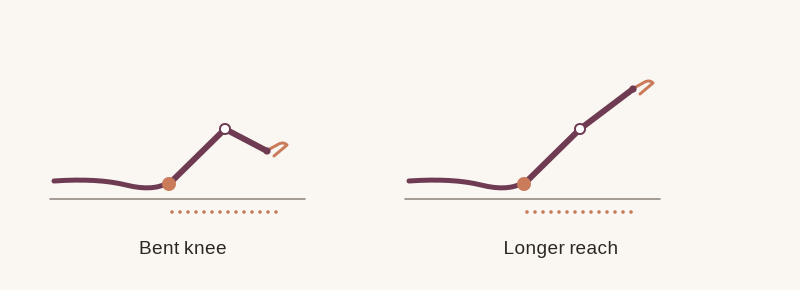
A longer reach puts more of the leg’s weight farther from the hip. The teacher can shorten the movement again.
Mental benefits of having a specific task to follow
If you have ever walked out of a group workout wondering what you were supposed to feel, a good beginner Pilates class offers a way to ask a narrower question. Instead of trying to understand an entire sequence, you can ask the teacher to watch one return of the carriage or one reach of the arm. Their answer can then be tested on the next repetition. For some people that small piece of evidence makes the session more absorbing than trying to reproduce a pose from across a room.
It is worth separating this immediate experience from broad promises about confidence or mood. In a controlled trial of 62 women, the mat Pilates group reported improvements from its own starting point on several measures, but researchers did not find clear differences between groups on those measures at the testing points. You may like how a lesson feels without treating it as a treatment for a mental health problem. Original study of life satisfaction and physical self-perception
Something specific to concentrate on
An instruction like “let the carriage come in quietly” gives your attention a destination you can hear as well as feel. If a thought about tomorrow’s meeting intrudes, you can return to that one detail when the next repetition begins.
Be realistic — concentration during a coached set does not guarantee sharper focus later, especially when you are short of sleep or under pressure.
Confidence from a cue you understand
A correction can feel personal in a new room until you can connect it with something concrete, such as being able to move an arm without shifting your whole torso. Asking the instructor to watch a second try gives you a chance to tell whether you understood their words.
Be realistic — figuring out a new cue is worthwhile even if the overall exercise still feels unfamiliar at the end of class.
Finding the version that suits you today
Beginner instruction can give you practice noticing when a set has become too complicated to follow and asking for the earlier version again. Once you have language for the change, such as a shorter reach or more time for setup, you can ask for it in another class.
Be realistic — a group teacher can adjust a lesson, while symptoms or restrictions that need assessment belong with a qualified healthcare professional.
A change of attention after work
For some people, listening to a teacher count through a sequence feels like a welcome break from planning, deciding and answering messages. If you prefer more silence or a longer final rest, trying a foundations yoga class gives you another way of spending that same evening. Compare Pilates and yoga for beginners
Be realistic — an unfamiliar machine or a fast soundtrack may feel stimulating, so notice which particular class leaves you ready for the rest of your evening.
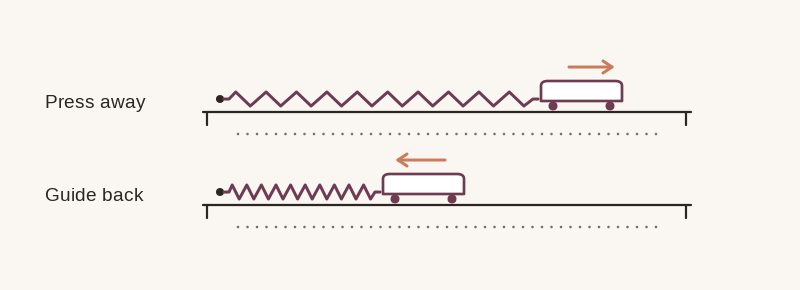
During footwork, the springs pull toward the starting position. You still control how quickly the carriage returns.
Habits you can build around a mat or reformer
Consider two otherwise promising lessons. One starts near the office at the end of the day and needs an advance reservation. The other uses a mat at home and fits into a lunch break. The lesson you will repeat can depend on whether a booked appointment helps you protect the time, whether travel eats into dinner or whether you enjoy exercising where someone can answer a question. If you run, placing a lesson between harder training days may matter more than the equipment. Pilates and yoga for runners
You also have some freedom over how much equipment enters the picture. If a studio lists a ring or bands, ask whether it supplies them and how beginners use them. Try the movements and ask the question before spending money on something unfamiliar. An optional Pilates ring can provide feedback in certain exercises, but you can begin with an ordinary mat lesson. Before booking a reformer, ask the studio whether it requires grip socks and whether you can bring your own. Grip socks for a first class
A practice you can repeat at home
A short mat sequence can be easy to revisit between lessons because the floor stays still and there are few settings to remember. When you find a demonstration you understand, save that exact session so you can recognize the starting positions another day.
Be realistic — a recording can repeat an instruction, but it cannot watch your movement or explain what a particular cue means for you.
A reason to keep an appointment
A reserved reformer and a familiar teacher can give a class enough structure that you protect the time on your calendar. Compare the cost of returning and the cancellation window with the ordinary interruptions in your week before deciding whether to buy several sessions. Compare mat and reformer Pilates
Be realistic — a low price per visit only works out that way if the dates, level and equipment rules let you attend.
A record of progress without a mirror
Write down one detail the teacher helped you change, such as controlling the final part of the carriage return or keeping a small leg circle even. Revisiting that note before the next class gives you a memory to test and a clear question if the instruction is still puzzling.
Be realistic — changing the pace, spring or starting position changes the task, so compare similar versions when deciding what has become easier.
A better choice for your next class
After your first lesson, ask which part made you curious enough to try again and which part left you wishing for a different pace. If the repetitions made sense but the machine felt rushed, you could try mat foundations or an equipment introduction before deciding how you feel about Pilates. Take the Pilates or yoga quiz
Be realistic — the second booking can be an experiment too, and you can choose another teacher or format as you learn what works.
Common questions
Can a beginner get benefits from mat Pilates?
Yes. Mat work uses body weight and changes in reach or position to challenge muscular control and endurance. You can try a beginner class without first learning to use a reformer.
Will Pilates permanently fix my posture?
Research has measured changes in specific sitting and reaching tasks after training. A class can help you notice options for moving, but a single position cannot account for how you feel during a whole day.
How soon should a Pilates class feel different?
You may understand a cue or repeat a movement more smoothly on the first day. Changes in endurance and flexibility in the cited trial were measured after a 12-week program, and people can progress at different rates.
What if I prefer the mental side of yoga?
Try a class with the kind of attention you enjoy. Pilates often uses repeated movement and precise feedback, while some yoga classes leave longer periods for breathing, quiet holds and rest.